
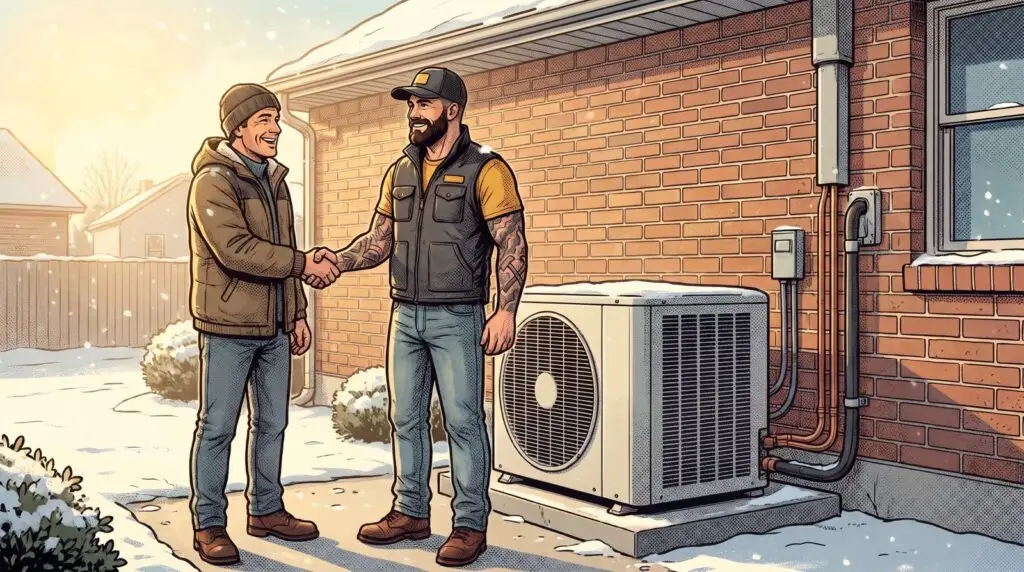
HVAC follow up automation means the calls, texts and emails after a quote go out on their own, on a schedule, and stop the second the homeowner answers. You still make the calls that matter. The system handles the rest, so no quote for a furnace, a heat pump or a new AC sits in someone’s inbox while you are on the next service call. Most HVAC quotes do not die on price. They die because nobody followed up while the homeowner was still deciding.
Here is what that looks like in real numbers, what most shops do today, and how the automated version runs.
What the numbers say about follow-up
We pulled every residential estimate one of our clients sent over six months. They are a landscaping and snow company in Connecticut, not an HVAC shop, but a homeowner deciding on a $9,000 patio and a homeowner deciding on a $9,000 heat pump behave the same way. That was 209 quotes:
- Homeowners who opened the estimate said yes 56% of the time. Homeowners who never opened it said yes 16% of the time.
- The median yes came 2.9 days after the quote went out.
- 90% of the yeses came within 16 days. The last 10% took longer than that.
- Bigger jobs were harder to close. Under $5,000, about one in three said no. Between $5,000 and $15,000, 47% said no. Over $15,000, 73% said no.
Read those as an HVAC owner. A tune-up or a repair is a small ticket that closes fast. A full system replacement sits right in the band where half or more of the quotes get lost. That is the work your truck and your season depend on, and it is the work most likely to slip away quietly.
Speed matters before the quote, too. Harvard Business Review research on the short life of online sales leads found most companies are not responding nearly fast enough. In HVAC the clock runs faster. A homeowner with no heat on a November night calls the next shop on the list.
How most HVAC shops handle follow-up today
Most guys run follow-up from memory. You walk the house, measure up, write the quote that night at the kitchen table, and send it. Then the phone rings with a no-heat call, and another, and the quote you sent Tuesday is gone from your head by Friday.
Maybe you keep a list on a clipboard in the truck. Maybe the office tries to call back on slow afternoons. Maybe you send one “just checking in” email a week later. None of that is a discipline problem. It is a timing problem. The window where a homeowner is comparing your quote to two others is about three days long, and those three days are usually your busiest.
The manual way also misses the quiet signal that matters most: whether the homeowner even opened the quote. A 16% close rate on unopened quotes is not about your price. Those people never saw it.
What HVAC follow up automation actually does
A follow-up system for an HVAC shop does five jobs you are not doing now, every single time, without anyone remembering:
- Sends the quote by text and email. From a local number the homeowner recognizes, with one plain line: “Here is the quote for the heat pump. Any questions, just reply here.”
- Watches for the open. When the homeowner opens a quote over your line, a call task lands on your phone or the office phone. That is the hour they are looking at your number.
- Resends what never got opened. No open after a day means a short text, not another email that goes to the same promotions tab.
- Runs the schedule. Day 3, day 7 and day 14 go out on their own, each one useful, none of them “just following up.”
- Stops the moment they reply or book. Nothing loses a customer faster than a reminder text the day after they said yes.
The owner does the one part a machine should not: picks up the phone on the big quotes and talks to the homeowner.
A follow-up schedule built for HVAC
HVAC has two kinds of quotes, and they need different follow-up.
Repairs and service. Small tickets, high urgency. The follow-up is speed. Every missed call gets a text back in under a minute, and every service request gets an answer before the homeowner calls someone else. Our post on missed call text back covers that part.
Replacements and installs. Big tickets, slow decisions. A homeowner pricing a new furnace is waiting on a second quote, a spouse, a rebate form, or the next cold snap. Here is a schedule that fits:
- Day 0: quote goes out by text and email the same day you walk the house.
- When it is opened: a call task. On a system replacement, this is the most valuable call of the week.
- Day 3: a second touch. A call on installs, a short text on smaller jobs.
- Day 7: something useful, not a nudge. A photo of a clean install you did nearby, or an answer to the question most homeowners ask about the equipment you quoted.
- Day 14: one direct ask. “Still want to get this on the schedule before it gets colder?”
- If they say no: one call to ask why. Then stop.
One thing to check today: what your own software sends after a quote goes out. The landscaping company’s estimating tool emailed every customer on day 10 to say their quote had concluded. One in ten yeses came after day 16. Those late deciders were told the door was closed before they made up their mind. Turn off anything that expires a quote on its own.
Big HVAC quotes need a person, not a drip
Automation does not close a $15,000 system replacement. A person does. What automation does is make sure that person calls at the right moment, every time, instead of when they happen to remember.
In the 209 estimates, the lost jobs over $15,000 were mostly first-time customers. Nobody hands a whole-house system to a stranger because of a nice email. On those quotes, the system’s job is to put the call on your phone the hour the quote gets opened, and again on day 3. Your job is to answer the questions the homeowner is too polite to email: what the warranty covers, why your equipment costs more than the other quote, whether the work can be split into two phases.
For the bigger picture on where HVAC jobs come from in the first place, see HVAC lead generation for owner-operated companies. For follow-up across every trade, our guide to following up with prospects breaks down the same 209 estimates in more detail.
Quick answers
How should an HVAC company follow up with leads?
Fast on service calls and steady on installs. A missed call or web request should get a text back in under a minute. A replacement quote should go out by text and email the same day, get a call when it is opened, and get touches on day 3, 7 and 14. Stop the moment the homeowner replies or books.
How many follow-ups does it take to book an HVAC job?
Plan on four or five over about two weeks. In the 209 home service estimates we studied, the median yes came at 2.9 days and 90% of yeses came within 16 days, so two weeks of follow-up covers nearly everyone who was going to buy.
What is the best way to automate HVAC sales follow-up?
Use a system that sends quotes by text as well as email, tells you when a quote is opened, sends the day 3, 7 and 14 follow-ups on its own, and stops the moment the customer replies. Keep the phone calls on big replacement quotes for a person.
What tools do HVAC companies use to automate follow-up?
Most HVAC shops already have field service or estimating software that sends the quote and stops there. The follow-up piece lives in a CRM connected to your phone number, so texts, open alerts, call tasks and missed call text back all run from one place.
Stop losing the installs you already quoted
You already did the hard part. You drove out, walked the house, sized the system and wrote the quote. Losing that job because nobody followed up on day 3 is the most expensive mistake in an HVAC shop, and the easiest to fix.
When Profit Revive builds this for a shop, quotes go out by text and email, opened quotes turn into call tasks, missed calls get a text back, and the follow-ups send themselves until the homeowner answers. You run the calls and the jobs. The system makes sure nothing you quoted goes quiet.
If you want that running for your HVAC business, apply to become a partner.