

An HVAC call answering service is whatever picks up the phone when you cannot: voicemail, a spouse, a live answering service, or an AI voice agent. For most owner-run HVAC shops, the right setup is an instant text back on every missed call plus a voice agent that asks what the system is doing, books the visit, and rings real emergencies through to you. A live answering service takes a message. A voice agent books the job. That difference is the whole decision.
Here is why a missed HVAC call costs more than most owners think, the ways shops cover the phone today, and what we would set up if it were our van.
Why an HVAC call cannot wait
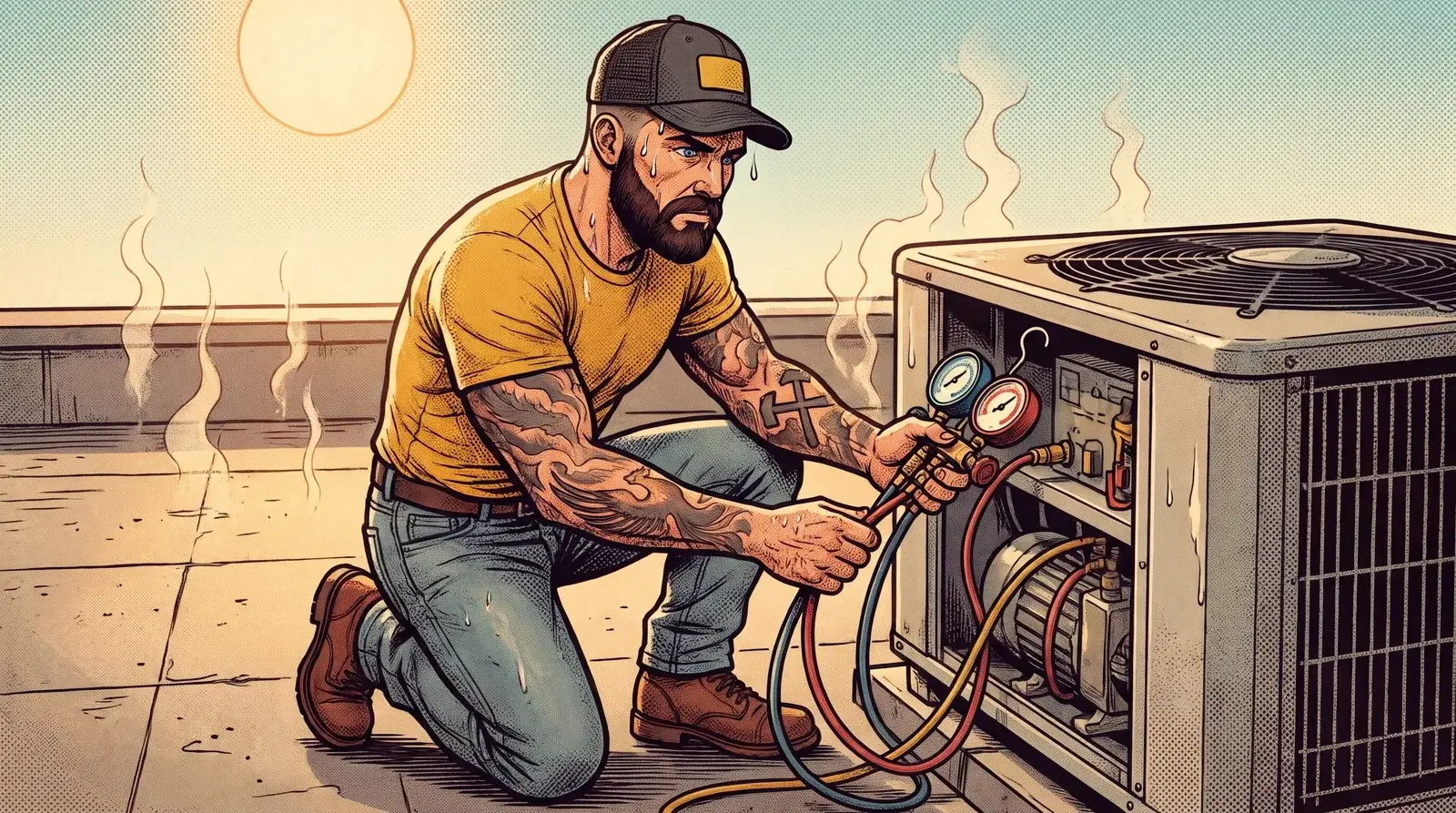
Nobody calls an HVAC company to chat. They call because the house is 58 degrees in January or 88 degrees in July, and they have kids, a dog, or an elderly parent inside. That caller is not shopping around for the best reviews. They are calling down the list until somebody answers.
And the days the phone rings hardest are the days you are least able to grab it. You are in an attic, on a roof, or flat on your back in a crawl space with your hands full of a blower motor.
Speed decides who gets these jobs. When Harvard Business Review audited 2,241 U.S. companies on how fast they answered web leads, only 37% responded within an hour. In a related study of 1.25 million leads, firms that tried to reach a lead within an hour were nearly seven times as likely to have a real conversation with the decision maker as firms that waited even one hour longer, and more than 60 times as likely as firms that waited a day or more.
Those were web forms from people with time to wait. A homeowner with no heat gives you minutes, not hours.
Missed calls cost you twice when Google is watching

The first cost is the job. The second one is quieter. If you run Google Local Services Ads, the ones with the Google Guaranteed or Google Screened badge at the top of the page, Google is grading how you handle the phone.
Google’s own help page on ad ranking lists “your responsiveness to customer inquiries and requests” as a factor, and says it plainly: “Missed calls may negatively affect your responsiveness.” Average response time is also part of what Google calls profile quality. So every call that rolls to voicemail can lose you the job in front of you and push your ad down for the next one.
The same page says turning on message and booking leads gives customers more ways to reach you “especially during nights and weekends when you can’t answer the phone.” Google knows owners miss calls. It rewards the ones who cover them anyway.
The ways most HVAC shops cover the phone
Most guys handle the phone one of four ways. Every one of them has a hole in it.
- Voicemail and callbacks at lunch. You check messages in the work truck between jobs. The problem is that most people with a dead furnace do not leave a message. They hang up and dial the next number. Your callback list only shows the patient ones.
- A spouse or family member on the phone. It works until that person has a job of their own, a doctor’s appointment, or a Saturday off. Then the phone goes back to voicemail.
- An office person. A real hire covers business hours, which is a big step up. But the phone does not stop at 5pm, and the heat does not quit on a schedule.
- A live answering service. A call center picks up in your company name, 24 hours a day. Better than voicemail. But most of them read a script, take a name and number, and email you a message. Nobody books anything, and you are still the one making the callback.
All four have the same weak spot. They depend on a person being free at the exact minute the customer calls, or they push the real work back onto you. We see the same pattern across trades. At a dumpster rental company we work with in Connecticut, 7 of 8 online checkouts in a month happened outside office hours. Customers buy when they are home and the problem is in front of them, not when your office is open. We dug into that in missed calls after hours.
Live answering service vs AI voice agent
This is the question most HVAC owners are really asking.
A live answering service is a person at a call center, usually handling calls for dozens of businesses at once. They answer in your name and follow your script. They do not know HVAC. They cannot tell a tripped float switch from a cracked heat exchanger, and they usually cannot see your schedule. What you get is a message: name, number, “furnace not working.” Then you call back and start from scratch.
An AI voice agent answers every call on the first ring, day or night, and never has three calls on hold. It asks the same questions you would ask, in the same order, every time. It writes the answers into your CRM, checks your calendar, and books the visit. Then it texts you a short summary before you climb down the ladder.
Where each one wins:
- Booking the job: the voice agent. The answering service takes a message.
- Same questions every time: the voice agent. A call center rep reads whatever is on the card, if they read it at all.
- Calls at once: the voice agent picks up every one. A rep handles one and queues the rest.
- A caller who is upset or confused: a good human still has the edge. That is why the setup below sends real emergencies straight to a person.
For an owner-run shop with one to five trucks, we would pick the voice agent and keep a person on the emergencies. You get call center coverage without a call center.
What a good HVAC call answering setup does

Whatever you use, it has to do these five things or it is just a fancier voicemail:
- Text back in seconds. The moment a call goes unanswered, the caller gets a text from your business number: “Sorry we missed you, this is Mike’s Heating and Cooling. What’s going on with the system?” That text lands before they dial the next shop. More on that in missed call text back.
- Ask the HVAC questions. Heating or cooling? What is it doing: no air, blowing warm, making noise, leaking, short cycling? Gas, oil or heat pump? Roughly how old is the system? Is anyone in the house at risk from the heat or the cold? Address and best number. The questions are the same every call. That is exactly why a machine should ask them, not you.
- Book it. A good setup puts the visit on your calendar in an open slot, not on a callback list for you to work through tonight.
- Put it all in one place. Every call, text and booking lands in your CRM with the answers attached.
- Know when to stop. It does not quote prices and it does not diagnose. You set the price after you see the equipment.
Real emergencies still reach you
The fear most owners have is that a robot will sit on a real emergency. It should not, and a good setup will not. You set the rules. A gas smell goes straight to the gas company first, then to you. No heat with a newborn or an elderly parent in the house rings your cell, night or not. A tune up request or a quote on a new system waits for the morning list.
Quick answers
What is an HVAC call answering service and do I need one?
It is anything that answers your business line when you cannot: a live call center, an office person, or an AI voice agent. If you are the one turning wrenches, you need one. The days your phone rings hardest are the days you are in an attic or on a roof.
How many HVAC leads am I losing by not answering the phone?
Check your own call log instead of trusting an industry average. Count the calls over the last 30 days that got no live answer and no callback within the hour. Most of those callers did not wait. If you run Local Services Ads, Google also says missed calls can hurt your responsiveness score.
What is the difference between a live answering service and an AI voice agent for HVAC?
A live answering service takes a message and you call the customer back. An AI voice agent asks your HVAC questions, books the visit on your calendar, and texts you the summary. For most owner-run shops the voice agent covers more calls and books more of them, with real emergencies routed to a person.
How do I make sure every HVAC call gets a response even after hours?
Stack three things: an instant text back on every missed call, a voice agent that answers nights and weekends and books the visit, and emergency rules that ring your cell for no heat with someone at risk. Every call gets a response in seconds, and you only wake up for the ones that need you.
Stop being the only one who can answer the phone
You cannot be in the attic and on the phone at the same time. You should not have to be. Profit Revive builds this side of the business for HVAC shops: the text back, the voice agent that asks your questions and books the visit, the emergency rules, and the morning list. It all runs in one CRM so you see every call, and it pairs with the quote follow-up that books the installs you already quoted.
If you want every call answered without hiring a call center, apply to become a partner and we will show you where your calls are going now.