
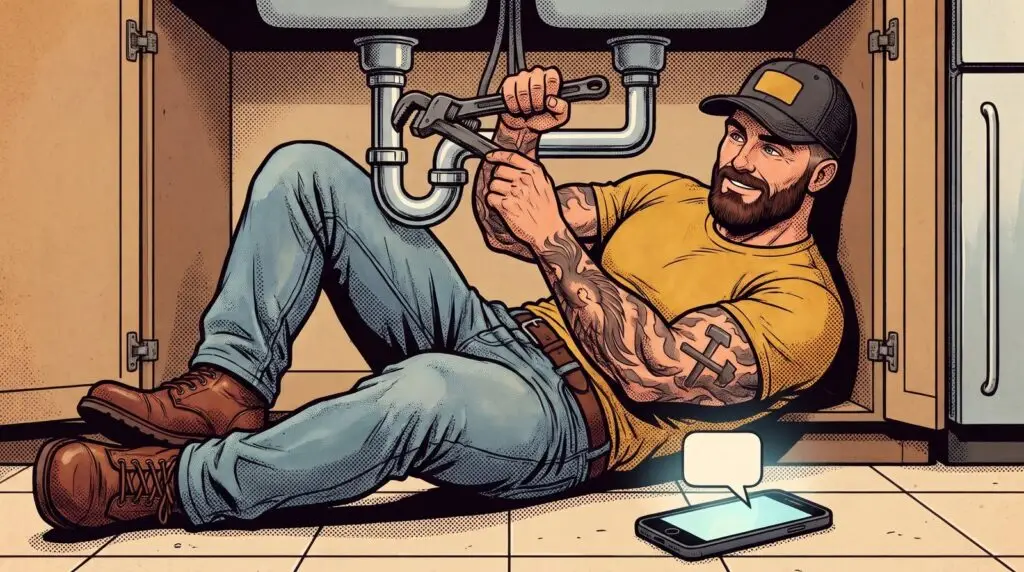
Plumbing automation means the work between the first call and the booked job runs without you. Every missed call gets a text back, every web form gets a reply, after hours customers can book, quotes get followed up on a schedule, and every finished job gets a review ask. You still do the plumbing and you still talk to the customer when it matters. You just stop being the only thing standing between a lead and the next plumber on Google.
Here is how that works, step by step, and what the numbers say about why it matters.
Why plumbing leads fall through the cracks
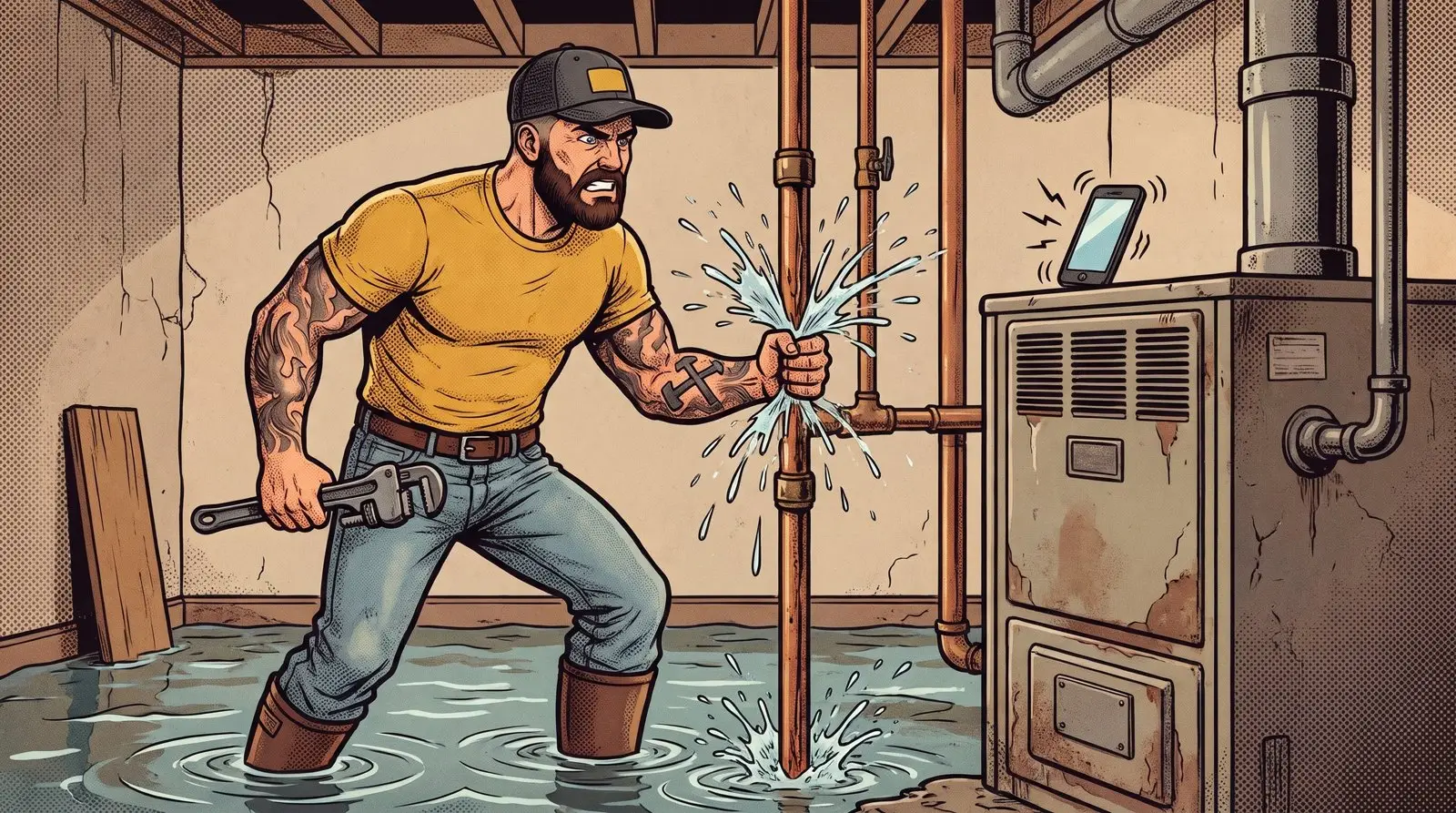
A plumber cannot answer the phone with both hands on a burst pipe. That is the whole problem. The calls come in while you are in a crawl space, sweating a fitting, or pulling a toilet, and the person calling usually has water on the floor. They are not going to wait for a callback tonight. They are going to call the next number.
Speed matters more than most owners think. When Harvard Business Review audited 2,241 U.S. companies on how fast they answered web leads, firms that tried to reach the lead within an hour were nearly seven times as likely to have a real conversation with the decision maker as firms that waited even an hour longer. Firms that waited 24 hours or more did more than 60 times worse. The average response time was 42 hours, and 23% of the companies never responded at all.
That study was not about plumbers. But a homeowner with a leaking water heater is a lot less patient than a business buyer filling out a form, so if anything the window is shorter for you.
The manual way most plumbers run it

Most guys handle this the same way. The phone goes to voicemail during the day. At lunch or in the work truck between jobs you listen to the messages and call back the ones you can. At night you sit at the kitchen table and return the rest, write the jobs on a notepad, and try to remember who wanted a quote on a repipe and who just had a slow drain.
Some shops add a spouse or an office person to catch calls. That helps during business hours. It does not help at 7pm on a Sunday, and it does not follow up on the quote you sent last Tuesday.
The manual way is not lazy. It is just a person doing a machine’s job while also doing a plumber’s job. Something always gives, and it is usually the callback, the follow-up or the review ask. We wrote about the cost of that first gap in missed call text back.
What plumbing automation does, step by step
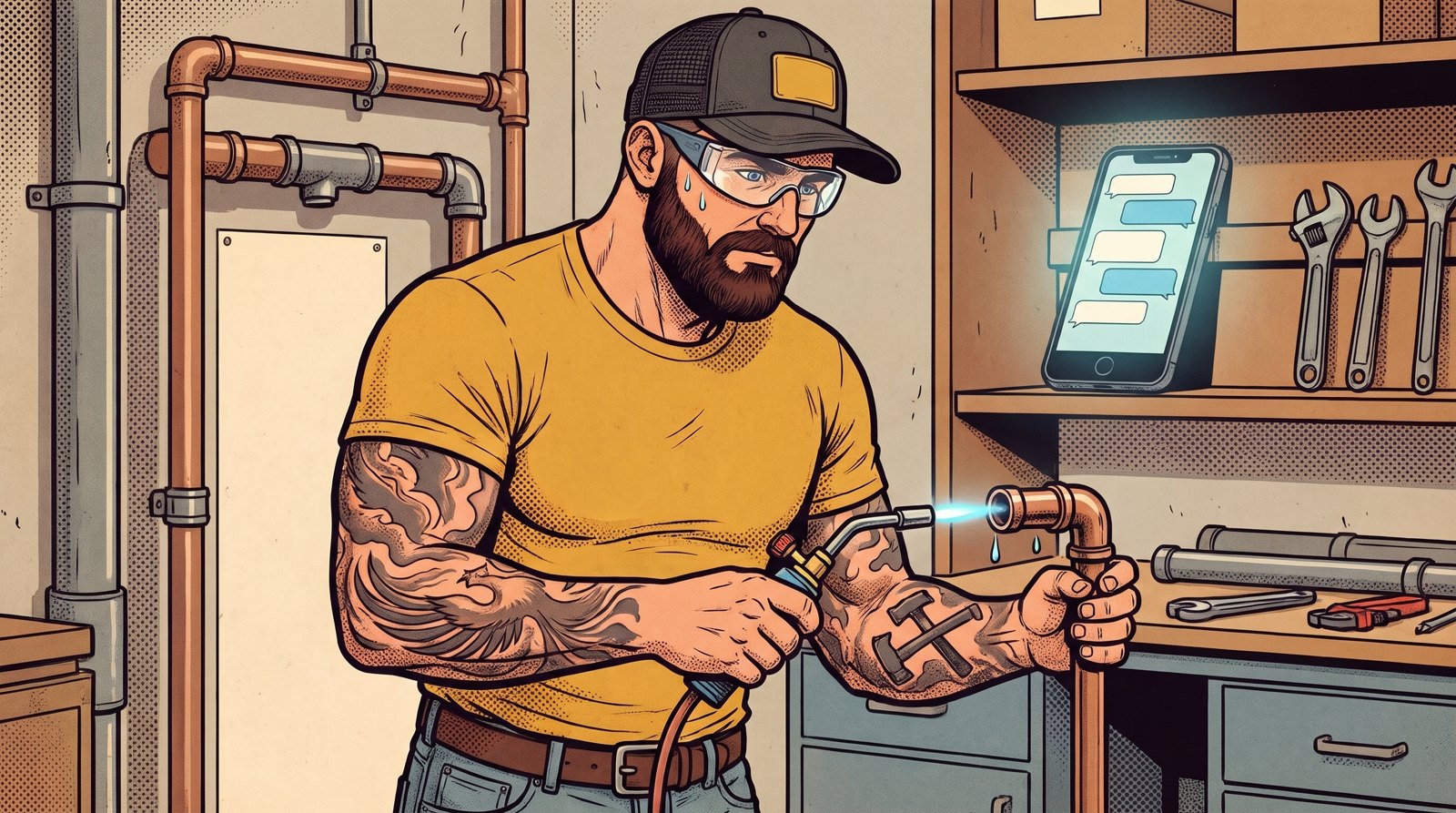
Here is what happens to a lead when the system is in place. You do not touch any of it until there is a real job to talk about.
- A call you miss gets a text back. Within a minute, from your business number: “Sorry we missed you, this is Mike’s Plumbing. What is going on and what town are you in?” Most people would rather text than leave a voicemail anyway.
- The answers come to you as a summary. “Water heater leaking, Groton, wants someone this week.” You read it in ten seconds between jobs and decide when to call.
- Emergencies ring through. If the customer says active leak or no water, it goes to whoever is on call. Everything else waits, already written down.
- Web forms get the same instant reply. Nobody fills out your form and hears nothing until tomorrow.
- After hours customers can book. A booking link or a voice agent takes the details and holds a time.
- Quotes go out by text and email, and you can see when they are opened.
- Follow-ups send on a schedule and stop the moment the customer replies or books.
- A finished job triggers a review request while the customer is still happy about the hot water.
The after hours piece is bigger than it looks. One of our clients, a dumpster rental company here in Connecticut, put an online booker on their site. In one month, 7 of its 8 online checkouts came outside office hours. Nobody was there to answer those customers. The system was.
Where the bigger plumbing jobs get lost: the quote

Small service calls mostly book on the first call. The bigger work, a water heater swap, a repipe, a sewer line, a bathroom rough-in, lives or dies on the quote. And most quotes die quietly.
We pulled every residential estimate one of our clients, a landscaping and snow company in Connecticut, sent over six months. That was 209 quotes. Different trade, same homeowners:
- Customers who opened the estimate said yes 56% of the time. Customers who never opened it said yes 16% of the time.
- Half of all yeses came within 3 days. 90% came within 16 days.
- Bigger jobs were harder to close. Between $5,000 and $15,000, 47% said no. Over $15,000, 73% said no.
Each number points at something a machine should handle. Send the quote by text, not only by email, so it actually gets opened. Follow up inside the first three days. Keep following up for about two weeks instead of giving up. And watch what your own software sends: that company’s estimating tool emailed customers on day 10 to say their quote had concluded, while 10% of the yeses came after day 16.
On the big quotes, the system’s job is to tell you when to call, not to replace the call. When a $12,000 repipe quote gets opened, that should show up on your phone as a task: call this customer today. The full schedule is in how to follow up with prospects.
What to automate and what to keep for yourself

Automate anything that is the same every time. The first reply to a new lead. The three questions you always ask: what is wrong, where is the house, how soon. The quote reminder on day 3, day 7 and day 14. The review ask after the job. None of that needs you, and all of it falls apart when you are busy, which is exactly when the leads are coming in.
Keep the parts that need a plumber. Diagnosing the problem. Pricing the job. The phone call on a big quote. Walking the homeowner through why the old cast iron has to come out. That is where you win the job, and it is where your time should go.
The review ask is a good example of why the automation has to be built right, not just switched on. That same Connecticut company sent a basic review request to 120 customers and got 3 reviews, about 2.5%. A weak ask is barely better than no ask. The ask has to come fast, from a name the customer knows, with one tap to the review page. We covered that in getting more Google reviews on autopilot.
This is the same kind of lead handling that helped Denison Tree Removal go from $19,000 to $113,000+ in a single month, November year over year. Different trade. Same leak: good work, and leads slipping away between the call and the booked job.
Quick answers
How do I automate my plumbing business?
Start with the gap between the first call and the booked job. Set up a text back on every missed call, an instant reply on every web form, an after hours booking option, quotes sent by text and email with open tracking, a follow-up schedule that stops when the customer replies, and a review request when the job is closed out. The plumbing stays yours. The chasing goes to the system.
What software do plumbing companies use to manage leads and jobs?
Most use field service software for scheduling, dispatch and invoicing, plus a phone and a lot of memory for everything before the job. The gap is lead handling: answering missed calls, replying to forms and following up on quotes. A CRM with text, call tracking and automated follow-up sits in front of your scheduling software and feeds it booked jobs.
How do I stop losing plumbing leads when I am on a job?
Make sure no caller ever reaches a dead end. A missed call should trigger a text within a minute that asks what is going on and where the job is, and the answer should land on your phone as a short summary. Emergencies can ring through to whoever is on call. Everything else waits for you with the details already written down.
What does a fully automated plumbing business look like day to day?
You work the job. Calls you miss get a text back, forms get answered, after hours customers book themselves, quotes go out and get followed up on schedule, and finished jobs get a review ask. Your phone shows you who needs a call from you and why. You spend your evenings off the phone instead of returning voicemails.
Get plumbing automation running in your business
You already get the calls. The question is how many of them turn into jobs while you are under a sink. When Profit Revive builds this for a plumbing company, missed calls get a text back, forms get answered, quotes get followed up on schedule, and your phone tells you who to call and why. You keep doing the plumbing.
If you want that running in your shop, apply to become a partner and we will show you how it would work with the calls you already get.