
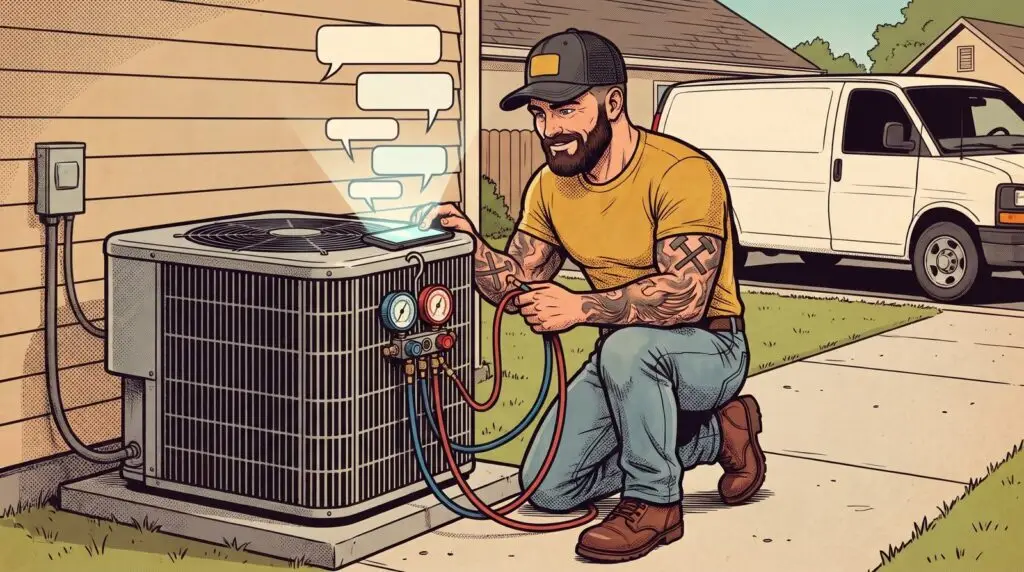
HVAC business growth does not have to start with another truck. Most owner-run HVAC shops already get enough calls, quotes and maintenance customers to grow. They lose a share of them in four places: calls nobody answers, quotes nobody chases, maintenance customers who never renew, and a review rating that keeps them out of the map pack. Fix those four and the same crew books more work.
Here is where each leak shows up, the numbers behind it, and what fixes it without you doing more paperwork at night.
Why another truck is the expensive way to grow
The usual plan goes like this. Business is good, the schedule is full in July and January, so you buy another van, hire a tech, and spend more on ads to keep him busy. That works when every call already turns into a job. In most shops it does not.
If your shop misses calls, lets quotes sit, and loses maintenance customers every spring, a second truck just doubles the size of the bucket with the same holes in it. You pay for the van, the tech, the tools and the ads, and a chunk of the new leads leak out the same way the old ones did.
The cheaper growth is in the work you already paid to get. Every one of the leaks below is a customer who called you, asked you for a price, or already bought from you once.
Leak 1: the calls you miss while you are on a job
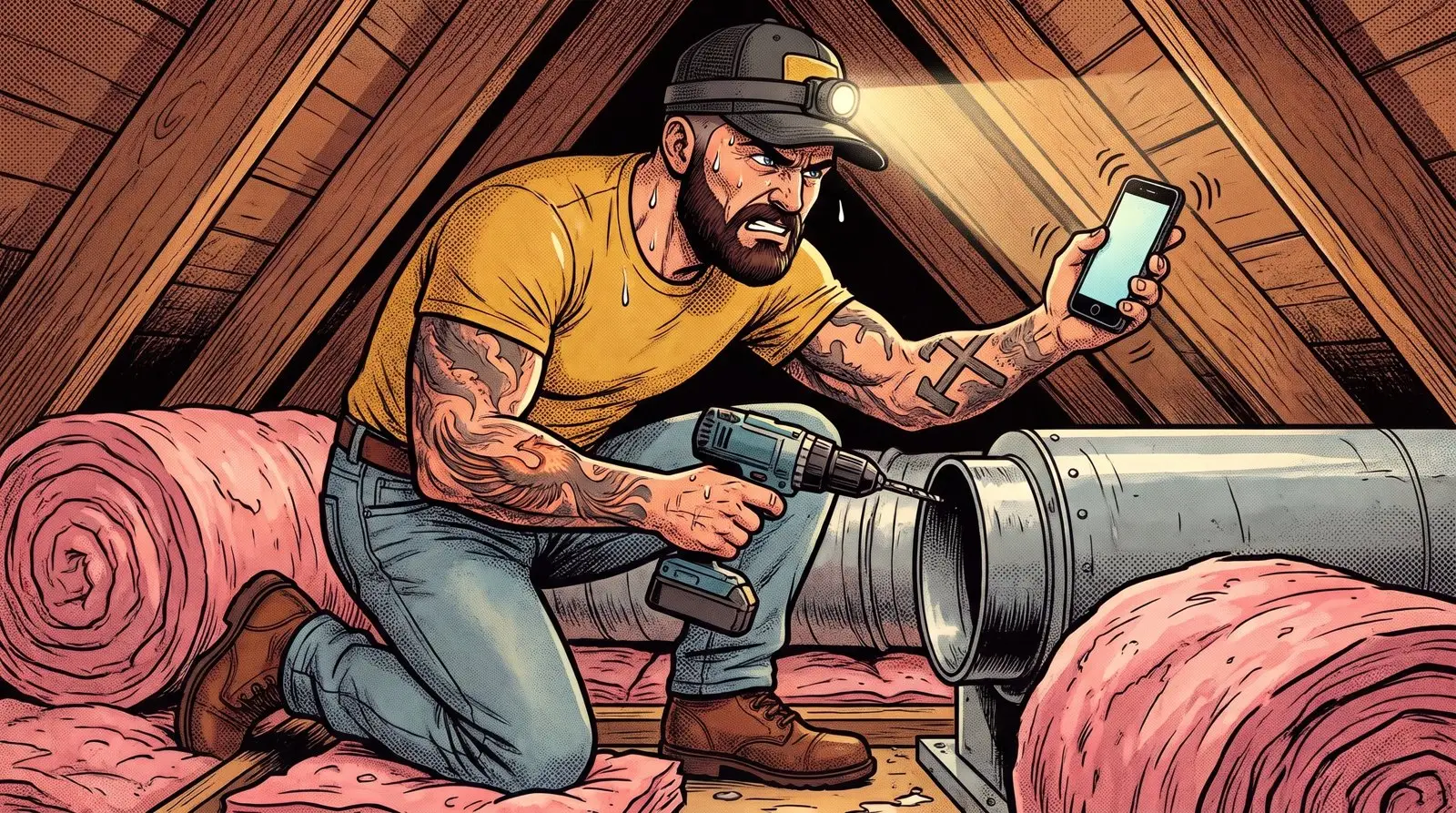
An HVAC owner spends the busiest days of the year in an attic, on a roof, or in a crawl space. Those are the same days the phone rings the most. A homeowner with no heat in January or no cooling in a heat wave calls the first number on Google. If it goes to voicemail, they call the second one.
Speed decides most of these. When Harvard Business Review audited 2,241 U.S. companies on how fast they answered web leads, firms that tried to reach the lead within an hour were nearly seven times as likely to have a real conversation with the decision maker as firms that waited even one hour longer. Firms that waited a day or more did more than 60 times worse. The average response time was 42 hours, and 23% of the companies never responded at all.
That study was about business buyers filling out forms. A family with a dead furnace is a lot less patient. We broke down what those missed calls cost in how much a missed call actually costs a trade business.
Leak 2: the quotes nobody chases

Replacement and install quotes are where the real money is in HVAC, and they are where follow-up falls apart. The quote goes out, the day fills up, and the follow-up happens if you remember it between service calls.
We pulled every residential estimate one of our clients, a landscaping and snow company here in Connecticut, sent over six months. That was 209 quotes. Different trade, same problem:
- Customers who opened the estimate said yes 56% of the time. Customers who never opened it said yes 16% of the time.
- The median yes came in under 3 days. 90% of the yeses came within 16 days.
- Bigger jobs were harder to close. Under $5,000, roughly a third said no. Between $5,000 and $15,000, 47% said no. Over $15,000, 73% said no.
A full system replacement sits right in those top two bands. That is a job where one phone call on the day the quote gets opened is worth more than five emails a week later. The full schedule is in how to follow up with prospects so you book the job.
Leak 3: maintenance customers who quietly do not renew

Maintenance agreements are the steadiest money an HVAC shop has. They fill the slow weeks, and the customers on them are the first ones to call you when the system dies. Most shops treat the agreement as done once it is signed.
The same Connecticut company showed us how these customers actually leave. Of 15 seasonal plan customers who lapsed, 10 stopped at the end of a season and simply never signed up again. Nobody cancelled. Nobody complained. The renewal just never got asked for. And of 84 residential customers who stopped buying altogether, 47 stopped in the middle of the season, which usually means something went wrong and nobody called to find out.
Those are two different leaks with two different fixes. The quiet non-renewal needs a renewal ask that goes out before the season, every year, on time. The mid-season drop needs a phone call from a person, the week it happens.
Leak 4: the rating that keeps you off the map
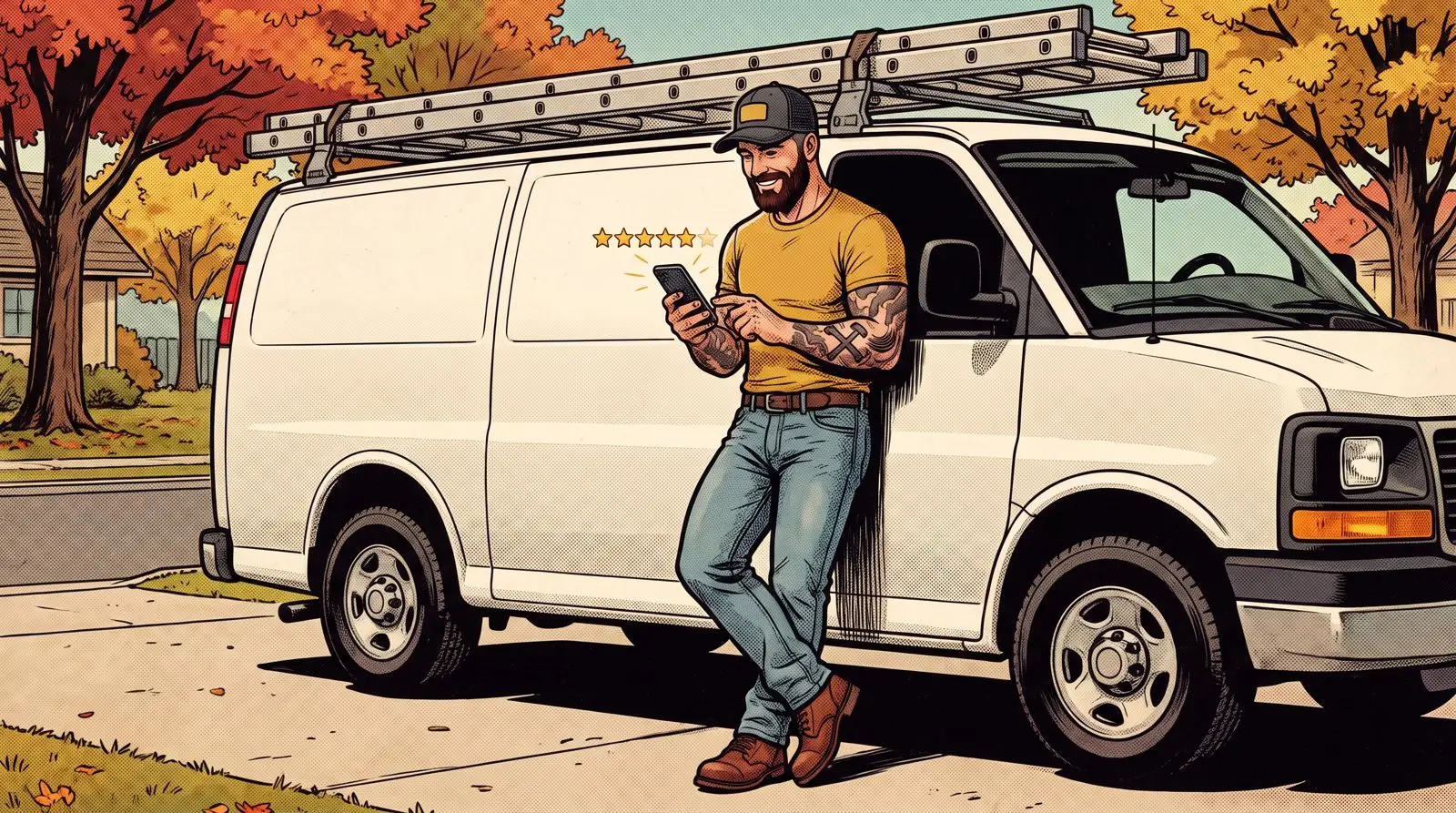
When someone searches for furnace repair near them, Google shows three businesses in the map before anyone scrolls. Google says how many reviews you have and how positive they are can help your local ranking.
That Connecticut company had 27 Google reviews at a 4.3 rating. The competitors beating them in the map had as few as 2 to 16 reviews, all rated between 4.7 and 5.0. The gap was the rating, not the count. And their first review request went to 120 customers and got 3 reviews back, about 2.5%, because the ask was weak and went out once.
HVAC shops sit on a pile of happy customers: every no heat call you fixed on a Sunday, every tune up that went smoothly. Most of them would leave a review if someone asked at the right moment. More on that in how contractors get more Google reviews on autopilot.
The manual way, and what does it for you
Most guys try to plug these leaks by hand. Call back voicemails from the work truck at lunch. Keep a list of open quotes on a notepad. Text a few customers for reviews when you think of it. Send out renewal reminders in March if the office gets to it. It works for a week, then the busy season hits and all of it stops, which is exactly when the leaks are biggest.
None of these jobs need you. They are the same steps every time, which is why a machine should run them. When Profit Revive builds this for an HVAC business:
- Every missed call gets a text back in seconds, and an AI voice agent can answer, ask what is wrong with the system, and book the visit.
- Every quote goes out by text and email. When a big one gets opened, it turns into a call task on your phone. The follow-ups on day 3, 7 and 14 send themselves and stop the moment the customer replies.
- Maintenance customers get a renewal ask before the season, and a customer who skips a visit gets flagged for a call.
- Every finished job gets a review request at the right moment, with a reminder if they do not leave one.
You still do the HVAC work, and you still talk to the customer when it matters. You just stop being the only thing standing between a lead and the next shop on Google.
Quick answers
What are the fastest ways to grow an HVAC business right now?
Book more of the work you already get before you buy more of it. Answer or text back every call within minutes, follow up on every install quote for about two weeks, renew maintenance customers before the season, and ask every happy customer for a review. Each of those turns leads you already paid for into jobs.
How do I get more HVAC calls from my existing service area?
Get into the Google map results for your towns. Google says reviews and ratings help local ranking, and in the data we looked at the rating gap mattered more than the review count. A steady review ask after every job is the cheapest way to close it.
What growth strategies work for small owner-operated HVAC companies?
The ones that do not need the owner to remember anything. A small shop does not lose jobs because it does bad work. It loses them because the owner is on a roof when the phone rings and too tired at night to chase quotes. Automate the callback, the quote follow-up, the renewal and the review ask.
How do I stop losing HVAC leads to bigger competitors with faster follow-up?
Match their speed without their office staff. An instant text back on every missed call, a voice agent that can book the visit, and quote follow-ups that send on a schedule let a two-truck shop respond as fast as a franchise with a call center.
Grow the shop you already have
Before you buy the next van, plug the four leaks in the one you have. The calls, quotes and customers are already coming in. The job is making sure they turn into booked work.
That is what we build. Denison Tree Removal went from $19,000 to $113,000+ in a single month, November year over year, after we built their website, their follow-up and their content. If you want the same kind of system working in your HVAC business, apply to become a partner and we will show you where your shop is leaking and how we would fix it.